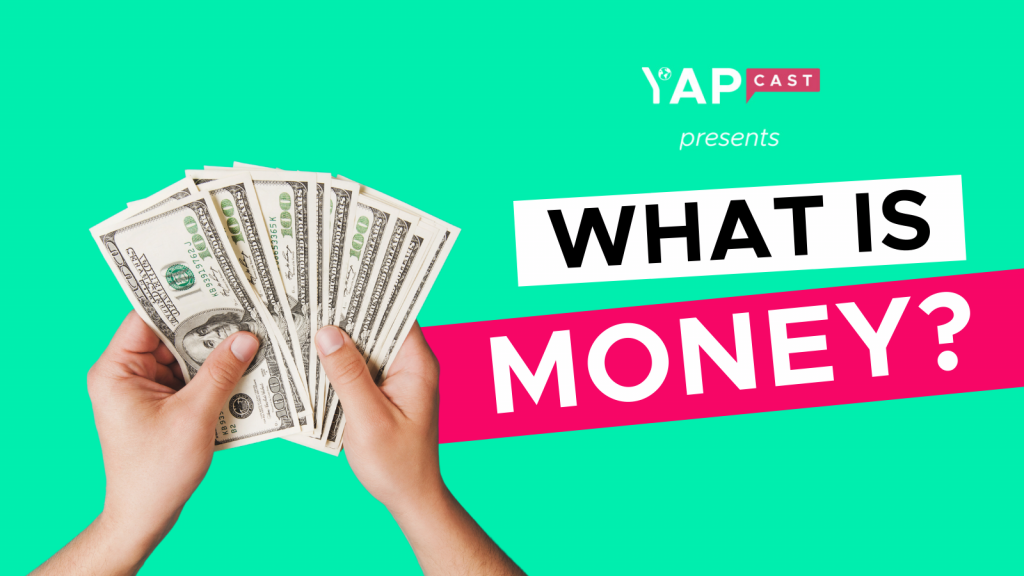
What Is Money? (S1E1) Transcript
Listen on:
Samantha 0:03
Hi I’m Samantha Yap, and I help blockchain and cryptocurrency companies tell their stories. I’m really passionate about demystifying emerging technologies and making it easy to understand for everyone.
I’m embarking on a journey to discover the history of money, in order to better understand where money is heading today. In this series we’ll explore why Bitcoin, digital currencies and decentralised finance may play an important role in our future.
Come join me on The Story of Money, by YAP Cast.
Samantha 0:31
So where better to start the journey of money than on the Yap islands, nine degrees north of the equator in tropical Micronesia, a region in the western Pacific Ocean. The nearest significant landfall from Yap is New Guinea 1400 kilometres to the south. That's about from London to Rome.
Samantha 0:53
Burt Lancaster, an American actor and producer, made a movie there about the very thing I want to talk about the monetary system of Yap. Now my family name isn't connected to the islands. And we didn't name this podcast after it either, but I figured it's a great starting point for understanding the past and perhaps the future of money. The Yapese use dollars these days, but they're most famous for using donut shaped stones as a form of currency. However, it was not the only form of money at the time. Traditional money on Yap included coconut fibre rope turmeric, banana fibre mats, mortars and pestles and pearl shells - you get the gist, but it's the stone discs known as Rai or Fe, which have captured the imagination of sociologists and monetarists. The disks range in diameter from a foot to 12 feet, and they were made of a crystalline form of limestone called argonite. They were valuable because they didn't come from the Yap islands but had to be mined on the Palau islands 450 kilometres away. This made them hard to get and many fell off bamboo rafts while trying to carry the stones to Yap Island upon return. Such factors affected their value, along with size, colour shape, an age, and the number of lives expended to obtain it. In 1871, when an Irish adventurer called David O'Keefe, known as the 'King of hard currency' started mining and shipping Rai on an industrial scale, inflation kicked in, the Yapese developed a preference for the older stones and much larger ones until gradually, the tradition of mining stones was abandoned. Scholars are divided on exactly how the stones were used and what they actually signified. Their lack of agreement illustrates not just how historians can never agree on anything, but also that money itself remains much of a mystery, something I hope to unravel in this series. So what does it mean to possess our own money? We would usually demand that money is transferred to us either by digits on screen by our bank accounts, or the physical transfer of coins and notes. The Yapese didn't bother with this, though, at least with their stones because they were too large and heavy to transport easily. Most stones just stayed put in someone's backyard, but the community would be told about the exchange, and everyone would know who owned the stone, or what fraction of it. We do the same thing with gold, a certificate of ownership is usually enough to demonstrate that we own some of the bullion in a vault. Now this brings in the element of trust and accountability with money. Money has come a long way since the Yap, but it still relies on trust. We trust that the bank will look after our deposits. We trust that the customer who pays with cash isn't giving us counterfeit bills. We trust that the waiter who goes away with our credit card isn't going to clone it. So while we don't leave our money in the street or someone else's yard like the Yapese, we still rely heavily on trust to make our monetary system work. The system has refined itself over the centuries, but the basics have remained the same. So does this trust system work well? Or could it be better? Here to answer this question is George Harrap, the co-founder of Step Finance and head of decentralised finance at YAP Global. George is a crypto entrepreneur and one of the earliest Bitcoin pioneers. He has been in the crypto space for almost a decade now. First as an early miner, then a builder of the world's first crypto remittance startup. George now focuses exclusively on the decentralised finance space, which he believes is the next giant leap for crypto assets in blockchain technology.
Samantha 4:37
Hey, George, really excited to have you on YAP Cast. We have known each other for about two years. We worked together while you were running a crypto remittance company. It's been a while.
George 4:51
It's been a while but it's been a fun time. I think it's closer to like three years as well. So, yeah. Something along those lines.
Samantha 4:57
Yeah, like time flies. Because the thing about the industry that we're in is we travelled a lot before COVID to many conferences, and it was nice to see you around the world.
George 5:07
Yeah, hopefully that time will return again soon.
Samantha 5:09
Yeah, I'm really excited to go back to the basics because money as we know it is changing. So let's just start with: George, what is money to you?
George 5:20
Well, I think money is something central to everyone's life. And I think, for me, it is the ability to transact and ultimately, money is freedom, it is a representation of our time that we put into things, our labour, essentially. And yeah, I would say that money is this mechanism for us to transact our labour, you know, if I'm really good at building shoes, and, and you're really good at doing YAP Cast, we can trade our time and labour by this medium in between called money.
Samantha 5:49
But let's go to the basics. Money to many people is a piece of paper. I'm in London, and in the UK, if I want to go buy groceries, I will need either pieces of paper, or it would be a balance on my bank account. And I will go to the store, tap my card to the card machine and I'll be able to get my food. So, is that how you see money?
George 6:12
All over the world, people use a thing called money. And generally it's pieces of paper. And generally, these pieces of paper are issued by various governments around the world. There's like 200 of them. But I think we'd all agree that some monies are better than others, right? So you know, you probably wouldn't want to have a $1 trillion Zimbabwe dollar note to go and do your your groceries, as opposed to like, you know, a one Pound coin or something, it'd become kind of unmanageable, if you have to take a wheelbarrow with you every time you get to the supermarket. So given that, we know that some monies are better than others. So I guess for me, I'm trying to look for the best form of money. And I'm trying to use that best form of money. And I'm trying to incorporate that into my life. This hotel that I'm in, I paid for in crypto as a form of money, and in different parts of the world, you know, sometimes people have cards or mobile apps, or the physical cash, the pieces of paper.
Samantha 7:04
Did you say you paid for your hotel room in crypto? Because surely the hotel did not accept your Bitcoin or Ethereum?
George 7:12
Yes, there was a middleman involved who took my Bitcoin and then was able to pay the hotel in the form of money which they want, you know, which in this case, I'm in Dubai. That's Dirhams. Right?
Samantha 7:24
Right. But isn't that kind of inconvenient? Because like, why don't you just have Dirhams to pay for your hotel room? Why did you need to pay via crypto? That sounds inefficient.
George 7:34
Well, I literally couldn't. So like, one of the problems was that my bank card doesn't work. My billing address is not in the same country as the thing which I'm booking. And the website that I'm booking on, also doesn't accept cards issued in the country of which my card is from. So basically, like I couldn't actually pay for this hotel if I was to use the traditional banking system.
Samantha 7:56
Yeah but surely, these days, people have credit cards that are linked to Visa and MasterCard. You know, when I travel, yes, it's expensive exchange fees. But if I'm really stuck and lost somewhere in another country, I can trust that the more reputable hotels and restaurants will take my Visa or my MasterCard. Don't you have any of that?
George 8:18
Yeah, but it comes down to billing addresses and this like concept of, for some reason, when we book something online, we need to tell people where we live, I don't see why that even matters. If I have the money, and I want to give it to you, can't I just give it to you? And sometimes like they only do certain countries or certain cards, you know, there's lots of different things in between "Oh, is it a Visa or MasterCard?" and that can interfere with this transaction? If I give my money to the hotel via a Visa card, well, that includes a bank and includes a credit card issuer includes a merchant provider, like there's a lot of people involved in that transaction is like eight in total or something.
Samantha 8:55
And you still have to use a middleman though, if you want to pay in crypto. So that's another person involved, right? That's still middlemen?
George 9:02
Sure. But there's also places in the world that take crypto directly, where there's no middleman and I can just pay somewhere and I paid for that in Hong Kong. There's been places that I've stayed at and you can pay rent and stuff like direct and crypto.
Samantha 9:15
I can imagine that's rare. It's rare today to find a hotel that will take crypto, maybe you just are very good at finding the right places to go to?
George 9:26
I guess here's the thing, right? Like, I as a person who wants to use the services of a hotel, I have crypto and they as a hotel, need to pay rent and employees salaries and the local currency and government taxes or whatever it might be. So fundamentally, there's always going to be a need for Fiat. If everything we're valuing in society is using this money called Fiat and basically that the government is saying that you have to use it. So fundamentally, you're like, yes, people can accept Bitcoin, but at some stage, they're going to probably convert some of that to pay the bill.
George 10:00
So the question is like, Are there places where I can pay with crypto? And then it's somebody else's problem to do that? And the answer is yes, there's hundreds of 1000s, if not millions of places worldwide, where there's like these middlemen who essentially take your crypto and convert it into the local currency and then pay people. So yeah, I'm taking a plane flight soon as well. And, again, I've paid via crypto for that one, too. So there are some middlemen involved there that pay the airline who needs to buy fuel and pay for people's salaries and so on.
Samantha 10:29
So the Yapese store their money on a ledger. And that's how people back in the day knew how much money they had. For me, I know how much money I have based on the bank balance. And I know that at the end of the day, my bank will be able to give me that sum of money if I want to spend it for whatever I please.
George 10:47
Well, let me ask you this, why didn't you calculate the amount of wealth that you have denominated in Yapese rocks?
Samantha 10:54
Because today, Sainsbury's will only take my British pounds whenever I want to shop for groceries.
George 11:00
Right? So it's kind of geographically limited as well, right? So, you know, you might think of your wealth one way and somebody else might think of their wealth in an entirely different paradigm, it seems like you are trusting, you know, what the bank tells you as the numbers, you know, in in your bank balance, and you use those numbers to go and spend on stuff. And you're trusting that somebody else will give you something in return for these numbers, right? So it kind of has to have both people in this transaction trusting you have to have Sainsbury's at the grocery store, and you have to have yourself and you both kind of mutually agree that this thing is worth transacting, right?
Samantha 11:34
It works, they trust that my HSBC card has this bank balance, and then they'll take it. And I mean, the system works.
George 11:43
I guess, trust is only sort of relative to where you are, like they don't trust some other country or some other currency. So I think trust is kind of this relationship that comes back to governments and what they have jurisdiction over, you know, the government of the UK doesn't have jurisdiction over the government of France or the land of France or anything. So, you know, they can't take their money. So they have to have their own money. And they have to take that. So I would say that when we're talking about trust, keep it in context, that it's usually something that's very specific and regional to individual people. It's not global, it's not International - I can't spend my Pounds where I live at the moment. So I think we have to be aware that this is the best form of money that is kind of limited on sort of where we happen to be standing at the current present time? Are there better forms of money? And I would say that there are better forms of money. There are systems where we don't have to trust our local government or bank or something like that.
Samantha 12:41
Right. We have touched on currencies like Fiat currencies. And actually, could you give us an explainer like what is Fiat?
George 12:49
So Fiat means by decree, so its value is determined by decree, which means the government says it has value, so therefore it has value. Whereas we would say something like gold, gold has value not by decree, but by voluntary people transacting. So like, you can take one ounce of gold all over the world, and you can trade it for goods and services, you can trade it for stuff, people will value it. And it's not because they've been told to value it, or somebody saying, hey, you need to use this thing. It's just because it's one ounce of gold. And everyone realizes that that's a valuable thing. Whereas, you know, pounds euros, these things are not like that, like we just discussed, right? I can't take my pounds to Dubai and spend them. It doesn't work like that because people don't recognise it. So by decree versus a currency, which is voluntary, like gold.
Samantha 13:38
Right. So you touched before on gold? And it makes me think, do we even know where money came from? Because money seems to be a concept that we're all still inventing, we're kind of making it up as we go. Right?
George 13:53
Yeah, I think if you look through history, and history is a great example of, you know, the rise and fall of empires and tied to a lot of that is the money. Like, I think the first form of money was probably back in ancient Sumeria. I think that 5000 BC or something like that. And they used various tally sticks in order to see how much you owe somebody. So like a farmer might owe somebody, some some quote money, but they would register it as sort of notches on a stick, and the two people would take a copy of these sticks, or they would break the stick in two. And then if at a later date, you needed to make sure that that was a person I owed money, we could put the two sticks back together and it would work. So that's one example of how, you know, the ancient Sumerians used it. But ultimately, it kind of went from using sticks as money or with the Yapese case, you know, rocks, and a lot of civilizations around the world converged on gold and silver being money.
George 14:53
What we've seen throughout certainly the last 5000 years of history, is that the common theme for humans being able to transact with each other is that gold and silver seems to have been the predominant form of money. And often when somebody else tries to insert themselves in the middle of that, like a central bank, or some local ruler or something like that throughout history, and they've interfered with the the supply of the gold and silver coins or reduced the content of golden silver in these coins, is genuinely led to ruin and inflation. So you can look at the Roman Empire, you can see how the gold content in their coins, you know, when they first had the Roman Republic was very pure, but at the end of it, it was maybe 100th of that.
George 15:37
And, things were a lot more expensive back then, you know, because of this, I guess debasement of the real value of money. But what we can take from this is, money has to have value in order for it to be useful. If money doesn't have value, then why would you use it? Why would you, you spend all of your time working and doing all of these tasks, if you're earning something which is not useful at all, and has no value? So I think value is another core concept of money, we've got trust, we've also got value. And these are some of the tenets that you have to have in order to have a useful monetary system in your local country.
Samantha 16:14
Right. So you're basically saying gold and silver are more valuable than Fiat currencies that we have today?
George 16:22
Yeah, well, I mean, you know, you can take a one pound gold coin is currently selling for I think, at the Royal Mint, something like 17 hundred worth, I don't know what that is in pounds, it's probably 1500 Pounds or something that's versus like one Pound in a coin that you would probably have in your wallet right? So clearly, one is more valuable than the other. I guess the measurement here is like what do you measure it in? Do you measure it in Pounds? Do you measure it in dollars? Do you measure it in Bitcoin? Or what do you measure it in? So with gold, you always have this one measurement, which works everywhere in the world?
Samantha 16:57
Right, I get it. But practically, today, if I have a gold bar, and I go walk into my local restaurant, they won't take, I mean, maybe they would, but like, they won't take the gold bar, maybe like chip at it to go, "alright, this is how much your pizza costs". I mean, no one's using gold today to transact and it seems very clunky. I mean, right now, it seems like people have just gold bars in the vault?
George 17:23
Right, well, I mean, this is going back to history. Again, this is the same problem that many civilizations have faced over the years in that you had all of these physical metals, which were worth something, but carrying them around all day was really hard. So I think it was in China, paper money was invented there first. So you would have representations of money that's held somewhere else. So this kind of gets into the trust that we spoke about earlier, whereby, well, if we have 100 ounces of gold, and we make some pieces of paper that says, Well, you know, we have 100 pieces of paper, to certify that there is 100 ounces of gold backing these these pieces of paper at one ounce each, we have to trust someone for that right. Who are we going to trust?
George 18:09
And that's the question you could you could trust, maybe you know, the local merchant. And in ancient societies, that local merchant maybe became a bank, whereby they would have a vault, they would have all this gold there. And it would be much more practical to put it there because it was more secure, you couldn't get robbed. And they will just give you these pieces of paper. But of course, what happens if they issue more pieces of paper than the gold, which they already had. And that's where currency debasement happened, and where essentially, you could have these lots of these pieces of paper, they're easy to manufacture, they have really not much value at all. But the currency that's actually backing those things, you know, you've got to make sure that you have an equivalent amount, otherwise, your pieces of paper are useless. And you'll need more pieces of paper to buy the same thing. So that's sort of what we've seen throughout time.
Samantha 18:58
Okay, so in a sense, money is a medium of exchange that everyone kind of agrees and trusts today, we kind of all agree and trust that one British Pound is one British pound, one US dollar is one US dollar, we don't kind of agree that we should be transacting gold bars to buy houses today. But you're saying that that's kind of what works. Why are we using paper money today? What happened along the way?
George 19:29
Things have developed over the last, say, 500 600 years where you've seen the proliferation of a lot of these banks that have popped up, that started as places where people could store their gold, and these banks would issue promissory notes, essentially saying, "Hey, we're good for this amount of gold", and here's this piece of paper for you, you can redeem it at any time. That's how sort of the origins of modern banking started but right now you can't go and take your pounds and go to your local bank and say "Hi I'd please like the gold equivalent of this please and, and the money which is backing, you know my pounds", because no currency is backed by gold anymore. They're all based on basically the faith of the local government. So when we're talking about Fiat currency, currency by decree, we're talking about trust, we're talking about value.
George 20:19
Currently, we have no actual value that's backing the currency, we have the trust of the local government, and we have the decree of the local government saying that it's valuable. So this kind of means that you know, a lot of your day to day, you know, transactions depend on if you have a good government or not. And, you know, there's a lot of places where the local governments, let's say, are not ideal, so a lot of people in the world are transacting, without having this, this implicit trust in what they're doing. You know, if the bank is there, maybe the bank doesn't even give them an account. Maybe often, you know, currently, or I’ve worked with the UN in the past, I went to Tajikistan. And when we were there, we were told that two banks in the last few years collapsed, and everyone lost their money. So if you had money in the bank, this is a place where you're meant to trust, and you're meant to trust the value of it, because the government says it's valuable. Well, everyone just lost their money. And it's worth nothing, right? And now you're poor, because all your money's gone.
George 21:16
So I think, yeah, when we're talking about, yeah, value, we've got to really focus on these currencies, which are not dependent on these middlemen, and these intermediaries, which essentially have no value, and if they disappeared tomorrow, then then our wealth and value will also disappear. And that's a bad thing to have.
Samantha 21:35
So George, for you and me, we don't exactly face these problems that you just spoke about. The bank does give me money when I need to spend it, and I trust it today. And the system works quite well where I am, at least.
George 21:49
Not all the time. I remember one time when I was travelling in Malaysia, I had my card and the ATM ate my card. And now I have no access to money, and I have no ability to buy food for the next day, or pay for the rest of my hotel room. So I had to find some other sorts of money without a bank card and I went to the local bank, they didn't want to give me back my card. And all these sorts of things. So eventually, it ended up where I had some Bitcoin. I had a laptop. My friend was also in Malaysia at the time and I said, Hey, can we do a cash deal? And I sold him some bitcoins . He gave me the cash, and now I have money. So I guess yeah, the moral of the story here perhaps is, it can happen in many places around the world. You know, my example earlier of me paying, having problems paying for my hotel as well, because they didn't want to accept my debit card, or whatever reason, it was a card that wasn't issued in the right country. It probably works for us in this narrow band of circumstances. But that's not everyone in the world.
Samantha 22:50
Unfortunately, that's all the time we have today. George, thanks so much for sharing your insights with us.
George 22:55
Thanks for having me.
Samantha 22:56
We've had a great conversation about trust and accountability with our money, differences in the perceived value of money and the difficulties that can arise from trying to get our hands on our money when we need it. In the next episode, George and I are going to discuss if there's a solution to these challenges. If you’d like to watch my full length conversation with George Harrap, head to the YAP Cast Youtube channel. I’m Samantha Yap, and you’ve been listening to The Story Of Money, by YAP Cast.